
There are hundreds, if not thousands, of packing hacks on the internet. But, which hacks actually work, and which don’t? Today, I’ve set out to finally figure out the best way to use packing cubes by putting the most common packing cube tips to the test. I’ll be experimenting to see whether rolling clothes, fitting clothes to the shape of the packing cube, or rolling and folding clothes can squeeze more clothes inside.
Disclaimer: This post contains affiliate links. If a product is purchased using one of the following links, I may earn a small commission from the brand at no cost to you.
To complete the test, I’m using a standard large size packing cube from Beis. I’ve tried a couple different packing cube brands, and all of the large packing cubes across all brands seem to be about the same size as the cube I’m using in this test. Additionally, I’m packing a variety of different clothing articles, materials and thicknesses to mimic real life packing scenarios. Specifically, I’m packing a bulky sweatshirt, thin shirts, leggings, pajamas and a puffer jacket.
These are the viral packing cube hacks I’ll be testing:
- The “roll, don’t fold” method.
- Folding the clothes to the fit of the cube.
- The “roll and fold” method.
The ‘Roll, Don’t Fold’ Packing Cube Method
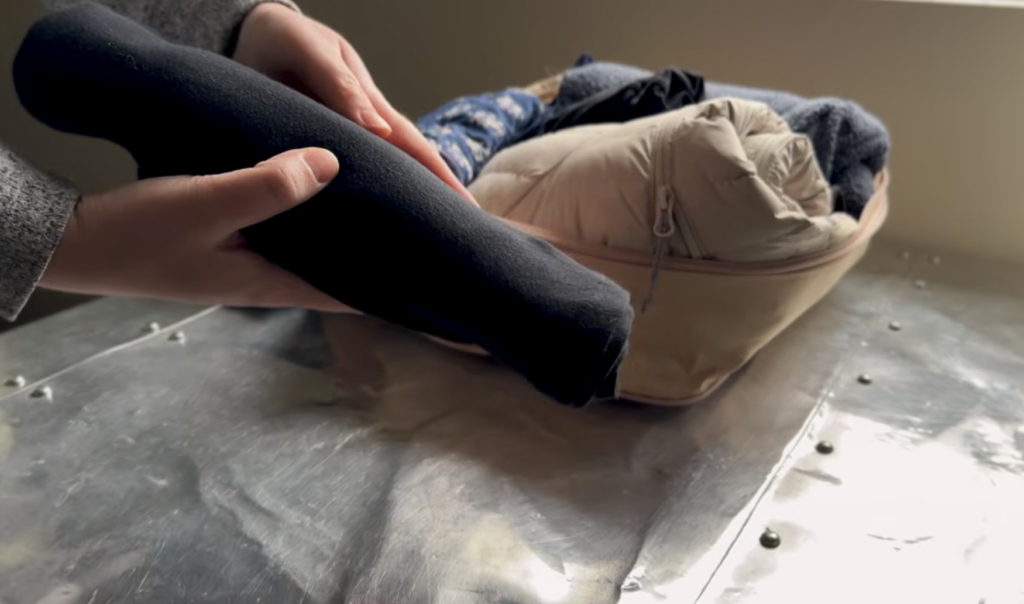
What is the “roll, don’t fold” packing method? Essentially, the “roll, don’t fold” method suggests that rolling your clothes instead of folding your clothes will enable you to fit more clothing inside your packing cube or suitcase. The “roll, don’t fold” packing method is probably the most commonly shared packing tip online.
I have to admit, I was a rolling skeptic for a long time. After all, our clothes have the same surface area no matter if we roll or fold, right? To my surprise, over the years, I have indeed found rolling clothes to pack more easily — and prevent wrinkles — in my suitcase. The key with rolling is to roll your clothes tightly and crease free.
During the best way to use packing cubes test, I started by rolling the bulkiest clothing items first. I folded the sweatshirt and jacket in half, then rolled from bottom to top to get the tightest roll possible. I always pack bulkiest items first in a packing cube because thinner material items can easily fit into the leftover crevices between bulky items. After packing all of the rolled clothing, the packing cube was full yet fairly easy to zip.
Folding Clothes To The Fit Of The Packing Cube
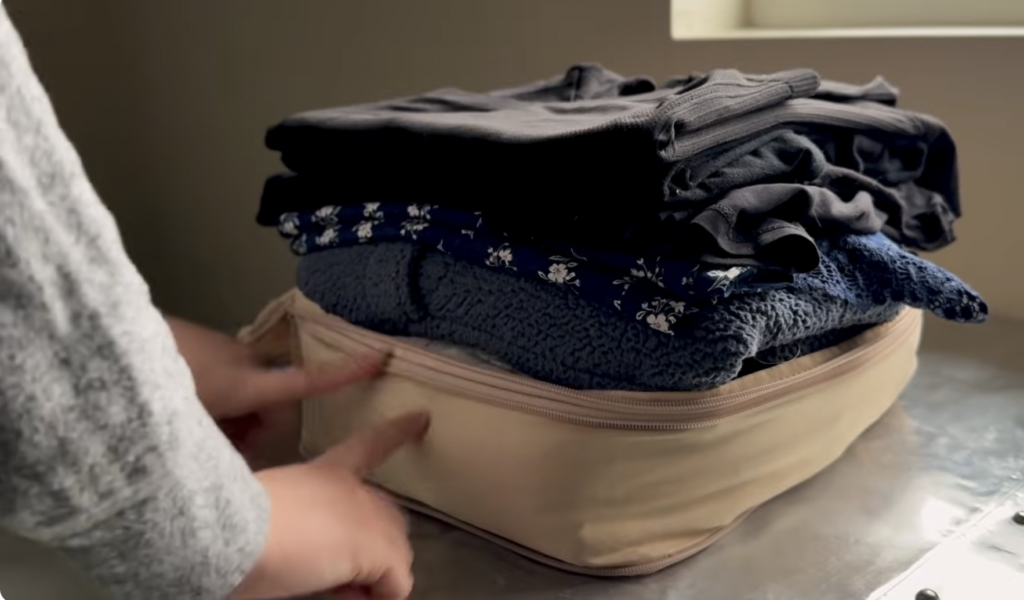
Another common packing cube method is to fold each clothing article to the exact dimensions of the packing cube. Again, I folded my bulkiest items first, using the folding methods tested in my how to pack heavy clothes blog post here. I folded each item right over the packing cube against the packing cube’s edges, ensuring a clean fold to the dimensions of the cube.
During the side-by-side comparison, folding the clothes to the fit of the packing cube was definitely harder to zip than purely rolling the clothes. I could see immediately after packing the exact same amount of clothes that the clothes did not pack as well into the cube, and that the packing cube was going to be harder to zip shut. While I was able to zip the packing cube shut, I really had to pull tight on the zipper to close it.
The ‘Roll And Fold’ Packing Cube Method
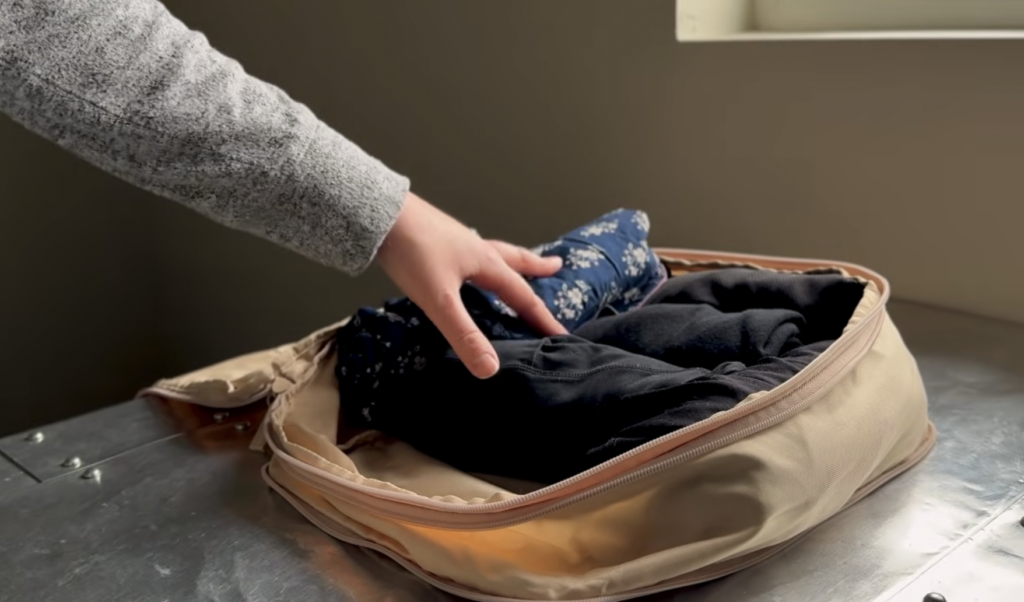
The “roll and fold” packing cube method involves a combination of rolling your thin clothes and folding your thick clothes. This is the packing cube method that I have personally used for a long time, so it was interesting to see how it measured up to the “roll, don’t fold” method. With this method, instead of starting with my bulky clothing, I actually started with my thin clothing. I find that folding the bulky clothes on top of the rolled thin clothes is easiest.
After packing all of rolled thin clothing articles in the bottom of the cube, I noticed there was still a decent gap in the packing cube to also roll my sweatshirt. That way, I only had one more item, the puffer jacket, to fold on the top of the packing cube. The packing cube filled by the “roll and fold” method zipped with about the same ease as the “roll, don’t fold” method.
Result: Best Way To Use Packing Cubes
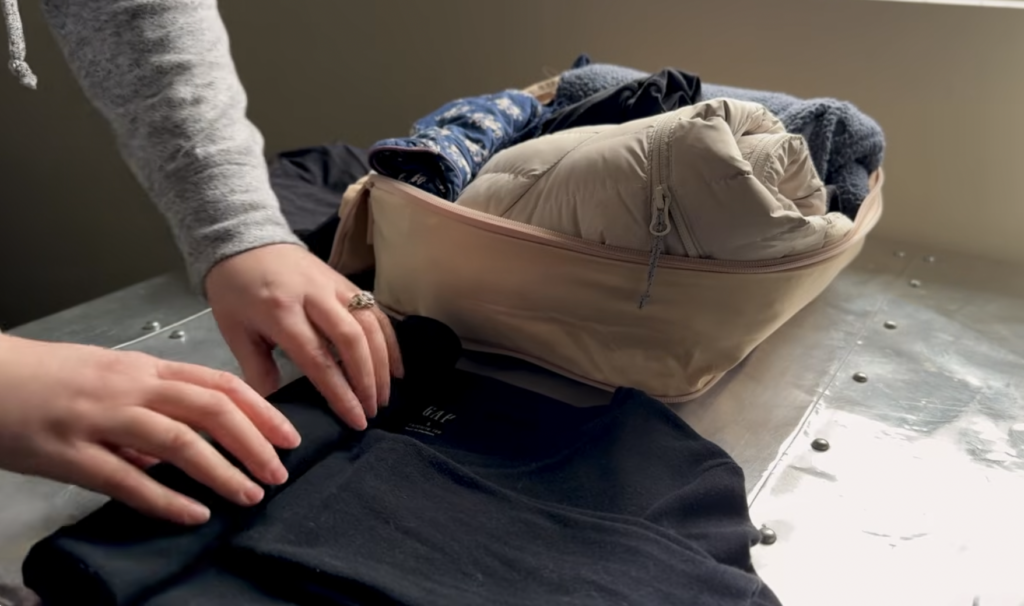
According to the test, the best way to use pack cubes is by rolling your clothes. Or, by rolling and folding your clothes. The common denominator? Rolling! It turns out my rolling skepticism was wrong all these years.
As you can see, I was able to pack the same surface area of clothing (meaning, the exact same clothing articles and the same number of items) in the packing cube using all three of these tested best ways to use packing cubes. So, the results are very close to tying. Ultimately, the winner came down to which method zipped easier. Rolling seems to be the clear winner.
More Packing Cube Tips
How To Pack Heavy Clothes For Travel
How To Pack Lighter For Any Length Trip
18 TSA-Approved Tips For Traveling With Makeup In A Carry On
How To Pack Fast + Efficiently For A Trip
Save The Best Way To Use Packing Cubes
Save the best way to use packing cubes here for later by sharing to socials.





Leave a Reply